
Best Hinge Photos in 2026 (with Examples)
Quick answer: the best Hinge profile uses all six photos as a deliberate set — a sharp, smiling close-up as the lead, a second warm face shot, a full-body, and two or three activity or lifestyle photos that show real personality, each with a short caption that invites a comment. Because Hinge lets people like and reply to one specific photo, the goal is not just to look attractive but to hand every photo something easy to react to.
The best Hinge photos aren't the ones you like most — they're the ones that earn a like and a comment on a relationship-minded app. This guide shows the exact six-photo lineup, real examples of each shot, the order to use, how captions work, and the photos to cut. Every rule here is what we score against in our free Dating Profile Analyzer.
What Makes a Hinge Photo "Good"
A good Hinge photo does two jobs at once: it makes you look attractive, and it gives the other person something specific to like or comment on. That second job is what sets Hinge apart from swipe apps — a like can be attached to one photo, so every photo is a potential conversation starter, not just a data point. The best-performing Hinge photos share five traits:
- A clear, well-lit face. Sharp focus and natural daylight beat every studio trick. If someone can't see your face instantly, the photo is dead.
- Genuine, warm expression. A real smile reads as approachable — which matters more on an app built for relationships than for hookups.
- Eye contact (at least once). Your lead photo should look at the lens. Eyes-to-camera is the single highest-attention element on a profile.
- A reason to comment. An activity, a place, a pet — something a caption or a like can hook onto.
- Honesty. Photos that match how you look in person. Anything that triggers a "catfish" suspicion kills the first date before it starts.
Hit those five and you're already ahead of most of the field. The rest of this guide is about assembling them into a six-photo lineup. For a deeper walkthrough of a full profile, see our Hinge profile review breakdown.
The Six-Photo Lineup (with examples)
Hinge requires exactly six photos and won't let you add more, so every slot has to earn its place. The best profiles cover four archetypes across those six photos, each answering a different silent question. Here's the lineup, with examples of the strong version of each shot:

The clean lead
Sharp face, daylight, eye contact — this is the photo likes get sent to.

The genuine smile
Warmth beats a posed jaw-clench on a relationship-minded app.

The full-body
Head-to-toe answers "how do they look in person?" — most profiles skip it.

The activity shot
A real hobby gives someone a specific thing to comment on.
- The clean lead close-up. Shoulder-up, sharp face, eye contact, daylight, genuine smile. Answers "do I find this person attractive?" and is the photo most likes get sent to.
- The second smiling face shot. A different setting or angle with the same warmth — proves the lead was no fluke.
- The full-body. Head-to-toe. Most profiles skip it, so including one instantly builds trust and sets you apart.
- The social-proof shot. One relaxed photo with friends — never as the lead, and only if it's obvious which one is you. Signals you have a life outside the app.
- The activity or hobby shot. Cooking, climbing, playing an instrument, on a trail — something that shows personality and hands someone a specific thing to comment on.
- The caption-bait photo. Save a slot for a photo whose caption invites a reply — a story, a light question, an inside detail people will want to ask about.
Notice what's missing: no filler. Because you can't drop below six, the fix for a weak slot isn't to leave it out — it's to reshoot a genuinely stronger version of that archetype.
Choosing Your First Photo
Your first photo is what shows in the discover feed and what most people decide on, so it should be the single best photo you own: a sharp, daylight close-up, eyes to the lens, one person, a genuine smile, no sunglasses or hat brim cutting across the face.
The most common mistake is leading with a photo you're emotionally attached to — a great trip, a favourite group night, a distant scenic shot — where your face is small or partly hidden. Save those for later slots. On a relationship-minded app the lead has one job: make your face impossible to ignore and easy to like.
How Hinge Photo Captions Work
Hinge lets you add a short caption to each photo, and this is a genuine advantage most people waste. Because someone can like or comment on one specific photo, a good caption turns a picture into an opening line — you're effectively writing the first message for them. Use captions to:
- Add context a photo can't show. Where the trail was, what the dish is, the story behind the trip.
- Ask a light question. "Guess where this was taken" or "rate the latte art" gives an easy, low-pressure reply.
- Reveal a small hook. One specific detail — a band, a book, a recurring hobby — that the right person will want to ask about.
Skip captions that just restate the obvious ("me at the beach"); they add nothing. The best caption pairs with your activity and lifestyle shots, because those are the photos people most want to comment on.
Hinge Photos to Avoid
Since you're locked to six photos, a weak one drags down the whole set — there's no padding it out with a stronger tenth shot. The biggest offenders we see in audits:
 Avoid
AvoidSunglasses hide your eyes
Covered eyes kill the connection — never in your lead.
 Avoid
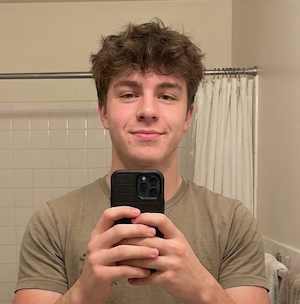
AvoidThe gym mirror selfie
Low-effort, and gives nothing to like or comment on.
 Avoid
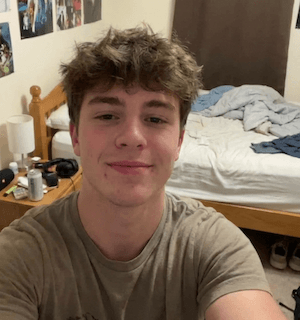
AvoidDark, cluttered background
A dim, messy setting drags the whole photo down.
- A group photo as the lead — no one will play "guess which one is you" in the discover feed.
- Sunglasses or a hat brim hiding your eyes in the first photo.
- Heavy filters or Snapchat smoothing — detectable and dishonest in 2026, and a fast trust-killer on a relationship app.
- Blurry, dark or low-resolution photos — if the face isn't sharp and lit, cut it.
- The shirtless-gym cliché outside an obvious athletic context — polarising and off-tone for people looking for something serious.
- An all-selfie set — front-camera mirror shots in every slot read low-effort and one-dimensional.
- Photos 2+ years old that no longer match your look — triggers catfish suspicion.
See our companion guide, Why Am I Not Getting Matches on Hinge?, for the full diagnostic.
How to Take Better Photos on Your Phone
You don't need a photographer to get better photos — you need daylight, another person, and ten minutes:
- Shoot in soft daylight. Near a window indoors, or outside in open shade or the "golden hour" after sunrise / before sunset. Avoid harsh midday sun and overhead indoor lights.
- Use the rear camera and have a friend shoot. Front-camera selfies distort your face and read low-effort — and an all-selfie Hinge set is a common reason profiles stall.
- Take many, keep few. Fire off 30–40 frames with small changes in angle and expression, then curate ruthlessly down to your six.
- Give the lens a genuine reaction. Have your friend crack a joke a beat before the shot — real warmth beats a posed smile.
- Shoot for the archetypes. Deliberately capture a close-up, a full-body and at least one real activity shot so you have a complete six-photo lineup, not six near-identical face shots.
If you simply don't have enough good shots — no full-body, no activity variety — and don't want to book a shoot, MatchShot can generate a full high-scoring set of Hinge photos from a few selfies. Whether the photos are shot or generated, run the set through the audit before you post it so you only publish the six that actually score.
Frequently Asked Questions
What is the best type of photo for Hinge?
A sharp, well-lit close-up with direct eye contact and a genuine smile, shot in natural daylight by another person rather than a mirror or front-camera selfie. Because Hinge lets people like and comment on one specific photo, your lead needs to settle attraction fast and give a clear, easy face to react to. Everything else in your six-photo lineup adds variety, context and conversation hooks around that one photo.
How many photos should you have on Hinge?
Six. Hinge requires a minimum of six photos and does not let you add more, so unlike swipe apps you cannot pad or trim the count — every slot has to earn its place. The best six span four archetypes: a clean close-up, a genuine smile, a full-body, and two or three activity or lifestyle shots that show personality and invite a comment. Six deliberate photos beat six random camera-roll grabs every time.
What is the best first photo for Hinge?
Your single strongest close-up: face in sharp focus, eyes visible and looking at the lens, natural light, one person only, no sunglasses or hat brim. On Hinge the first photo is what appears in the discover feed and what most people decide on, so it should be the best photo you own — not a group shot, not a distant scenic shot, and not a heavily filtered one. Save the trip photos and the fun group nights for later slots.
How do Hinge photo captions work?
Hinge lets you add a short caption or prompt to each photo. A like can be attached to a specific photo, and a comment gives the other person an opening line, so captions are a built-in conversation starter. Use them to add context a photo cannot show on its own — where an activity shot was taken, the story behind a trip, or a light question that invites a reply. Skip captions that just describe the obvious ("me at the beach"); the goal is to hand someone something easy to comment on.
Should I smile in my Hinge photos?
In your lead photo, yes — a genuine smile with eye contact is the most reliably high-scoring expression, and it matters even more on a relationship-minded app where warmth reads as approachable. Across the rest of the set you can vary it with a relaxed neutral or a laugh mid-activity, but avoid a full lineup of flat, unsmiling poses, which comes across as closed-off. Real warmth beats a forced grin.
How do I know which of my Hinge photos is actually best?
Do not trust your own gut — people are notoriously bad at ranking their own photos. Run your set through our free Dating Profile Analyzer: it scores every photo against 2026 Hinge standards, flags the weak ones, and gives you a ranked best-to-worst order plus a suggested lead, so you can rebuild your six-photo lineup in under a minute.
Related guides
Stop guessing which photos are your best.
Upload your six Hinge photos and our AI ranks every one against the standards in this guide. Full report in under a minute, free.
Analyze My Profile →Free. No sign-up tricks. No credit card.